Design and Play Educational Creative Writing Games!
Design and Play Educational Creative Writing Games!
Our Challenge
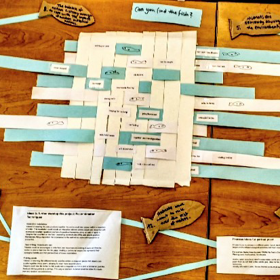
For a century, writers have used playful, experimental, and game-based methods for thinking about literature. Recent interest in game-based teaching has opened the door to bring these methods into the classroom. In this course, we will study these creative reading and writing games and then build our own! The games can be either digital or tabletop, so no expertise is required.
The Team
Teachers
These are the teachers you'll work with on the challenge.
Learners
- Study period
- 9 March – 3 April 2026
- Study format
- Blended
- Application period
- 24 October – 16 November 2025
- Credits
- 3 ECTS
- Hosting university
- University of Stavanger
- Topics
- Learner type
- EQF Level
Bachelor Level
Information
Value and progress
Educational game design and methods for game testing
The student has broad knowledge of the theoretical and methodological basis for educational game design, the processes, tools, and methods for game testing and assessment in terms of design
ESCO SKILLS
Apply academic knowledge to practical and theoretical problems
The student is able to apply academic knowledge and relevant results of research and development work to practical and theoretical problems and make well-founded choices
ESCO SKILLS
Present scholarly subject matter in a manner that sheds light on the problem
The student is able to find, evaluate and refer to information and scholarly subject matter and present it in a manner that sheds light on the problem
ESCO SKILLS
Insight into relevant academic and professional ethical issues
ESCO SKILLS
Plan and carry out assignments and projects
The student is able to plan and carry out varied assignments and projects over time, alone or as part of a group, and in accordance with ethical requirements and principles
ESCO SKILLS
Communicate academic subject matters both in writing and orally
The student is able to communicate important academic subject matters such as theories, problems and solutions, both in writing and orally, as well as through other relevant forms of communication
ESCO SKILLS
Exchange opinions and experiences with others to develop good practice
The student is able to exchange opinions and experiences with others with a background in the field, thereby contributing to the development of good practice
ESCO SKILLS
Be familiar with innovative thinking and processes
ESCO SKILLS
Not sure which competencies suit you?
Take our motivation scan to find learning opportunities that will help you reach your potential goal and growth.
Hosting university
University of Stavanger