
Virtual grid – reality of the sustainable future
Virtual grid – reality of the sustainable future
Our Challenge
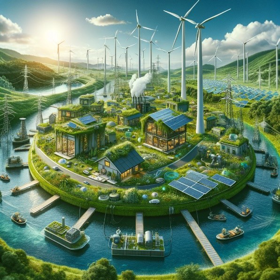
By the year 2050, an extraordinary transformation in energy generation is expected: Lithuania is forecasted to produce 74 TWh of electricity annually, all from renewable energy sources – a leap from the current 4.3 TWh! This isn’t just a national change, it reflects a global shift towards sustainable energy. However, the challenge aims to address a significant issue: electricity transmission networks must become stronger and more flexible to handle this increase. This is where your innovative thinking comes into play. In this challenge, you'll delve into the concept of a virtual electricity transmission grid. This innovative approach not only allows for more efficient control of energy flows through smart utilisation of flexible generators, consumers, and energy storage devices. Additionally, by acting as an ancillary tool, it will help us reduce the use of fossil fuels for electricity production and protect nature from the construction of new power lines. Your task is to explore this idea further, addressing questions from technical feasibility to its integration into energy and system service markets. Participating in this challenge is an opportunity to impact the future of energy, turning innovative ideas into solutions for a sustainable, renewable world.
The Team
Teachers
These are the teachers you'll work with on the challenge.
Learners
Challenge providers

- Study period
- 4 March – 3 June 2024
- Study format
- Online
- Application period
- 6 January – 25 February 2024
- Credits
- 6 ECTS
- Hosting university
- Kaunas University of Technology
- Topics
- EQF Level
Master Level
Information
Value and progress
Pinpoint research direction
Self-sufficiently pinpoint a unique and impactful research direction, utilizing existing knowledge and acquired competencies.
ESCO SKILLS
Tackle real-world issues
Innovatively tackle complex real-world issues using the core tenets of challenge-based learning methodology.
ESCO SKILLS
Utilise teamwork and leadership principles
Utilise effective teamwork and leadership principles while collaborating within diverse, interdisciplinary teams.
ESCO SKILLS
Create and present ideas and prototypes
Create and effectively present innovative ideas and developed prototypes tailored to the requirements of unique audience.
ESCO SKILLS
Not sure which competencies suit you?
Take our motivation scan to find learning opportunities that will help you reach your potential goal and growth.
Hosting university
Kaunas University of Technology
Challenge provider