Scientific working in engineering
Scientific working in engineering
Description
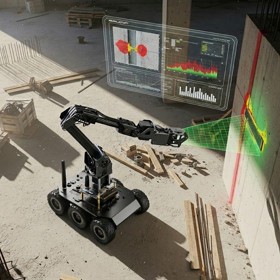
The construction industry has major potential to reduce greenhouse gas emissions, but it is characterized by physically demanding, repetitive, and hazardous work. At the same time, the sector faces a significant shortage of skilled workers. Challenges in labor limit productivity and hinder the industry productivity in achieving sustainability targets. Construction robotics offers a practical way to address current issues by automating selected tasks with mobile robotic systems and reducing reliance on manual labor in critical processes. This micromodule focuses on analyzing construction processes and developing a concrete concept for small mobile robots that can perform specific construction tasks. Robotic software will be developed within the course, based on clear technical requirements and scientific methods. In this module, which is addressing master students, the course will answer the questions, which tasks in the construction process can realistically be automated using mobile robots? How can a robotic solution be scientifically justified, tested, and clearly communicated in presentations and writing? What needs to be considered when planning and carrying out such a project in an agile team setting?
The Team
Teachers
Meet the expert teaching staff, who is here to guide you through this learning opportunity.
Learners
- Study period
- 6 April – 20 July 2026
- Study format
- Blended
- Application period
- 2 March – 29 March 2026
- Credits
- 6 ECTS
- Hosting university
- Hamburg University of Technology
- Topics
- Learner type
- Students
- EQF Level
Master Level
Information
Value and progress
Apply concepts and methods of scientific working in engineering
In close interaction with the course instructors and in continuous collaboration with their peers, students will learn to understand and apply the principles of scientific thinking. They will be trained to plan, implement, and critically analyze scientific projects in a structured manner, similar to the requirements of a prospective Master’s thesis. Throughout the semester, students will work on a project that forms a central component of the course and contributes to the final grade. Given the strong emphasis on scientific communication, the robotic project will be documented in the form of a scientific paper. In addition, students will learn how to use AI tools responsibly within the scientific process, assess their benefits and limitations, and critically reflect on the influence of these tools on their results.
ESCO SKILLS
Work in international, interdisciplinary teams
By the end of the course, students will have gained practical experience working in international and interdisciplinary teams. They will understand different team roles and responsibilities, reflect on team dynamics and their own contribution to overall performance, use digital tools for efficient online collaboration, and provide as well as receive constructive peer feedback in a structured and professional manner.
ESCO SKILLS
Evaluate robots as part of a construction system
Students will learn to systematically analyze construction processes and identify suitable use cases for robotic automation. They will assess where the deployment of mobile robots provides technical and economic value and define clear task requirements based on real construction scenarios. In addition, students will implement key robotic methods and tools, including the use of robotic simulation environments and the practical development of small mobile robotic systems. Through hands-on work, they will gain experience in core topics such as localization, navigation, and motion planning, as well as in addressing further technical challenges that arise from the specific construction task selected for their project.
ESCO SKILLS
Not sure which competencies suit you?
Take our motivation scan to find learning opportunities that will help you reach your potential goal and growth.
Hosting university
Hamburg University of Technology