CARE (Medical Connected Sensors and Virtual Reality)
CARE (Medical Connected Sensors and Virtual Reality)
Description
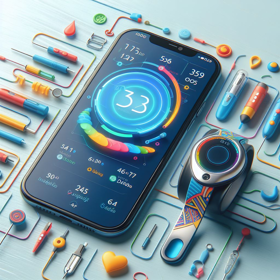
This micromodule will focus on connected health devices, remote medical monitoring and in particular, human health monitoring at home or in a medical environment. Students will learn how to scan an object with a 3D scanner, disassemble medical sensors in virtual reality and work on transmission and analysis of medical data. They will learn how biomedical sensors and systems work, and how interstitial fluid will be “transformed” into a value in an app. Volunteers will be equipped with connected glucose sensors and though be able to work on their own data. This micromodule will enable a wide audience to discover digital health, which is particularly interesting for those who will have a link with the health field in their future professional life. Students will work in international and interdisciplinary groups. An international mobility to INSA Toulouse is also an optional element for this micromodule.
The Team
Teachers
Meet the expert teaching staff, who is here to guide you through this learning opportunity.
Learners
- Study period
- 3 March – 30 May 2025
- Study format
- Hybrid
- Application period
- 28 October 2024 – 9 February 2025
- Credits
- 2 ECTS
- Hosting university
- INSA Group
Information
Value and progress
Discuss digital health and analyse key concepts in telehealth
By the end of this micromodule, you will be able to discuss the challenges of digital health and analyze the concepts of responsibility, informed consent, and information systems security.
ESCO SKILLS
Describe the functioning, assemblage, and purpose of connected medical devices.
By the end of this micromodule, you will be able to describe the principle of connected health devices, conceive, assemble and dismantle a medical monitoring device in a virtual reality environment .
ESCO SKILLS
Write and implement algorithims, and interpret data
By the end of this micromodule, you will be able to write and implement simple algorithms for processing medical sensor data and interpret the data obtained.
ESCO SKILLS
Working in an intercultural and interdisciplinary team to present results in English
By the end of this micromodule, you will be able to integrate an interdisciplinary and international team and present the methodology used and the main results in a foreign language (English).
ESCO SKILLS
Not sure which competencies suit you?
Take our motivation scan to find learning opportunities that will help you reach your potential goal and growth.
Hosting university
INSA Group