
Analysing Images with Artificial Intelligence (A-EYE)
Analysing Images with Artificial Intelligence (A-EYE)
Our Challenge
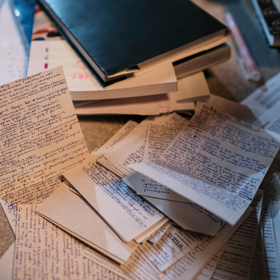
Do you want to uncover what censorship tried to erase from our historical memory — and use AI to do it? This challenge invites you to explore a powerful and largely invisible legacy: the censorship marks on radio scripts from Francoist Spain. Right now, the libraries at the Universitat Autònoma de Barcelona are carrying out a major digitization effort of documents from the Spanish Second Republic and Civil War. But there’s a critical problem — the handwritten censorship marks on radio scripts (crossed-out phrases, annotations, edits by fascist censors) are being lost in the process. How can we make these traces of repression visible again? How can AI help us recover the silenced layers of our cultural memory? In this project, you’ll work with real historical materials and help develop innovative tools that could finally solve a problem researchers have faced for over two years. You'll collaborate with archivists, technologists, and cultural researchers to explore how machine learning can detect, classify, and interpret visual traces of censorship — and you'll take part in a hands-on final sprint in Barcelona to showcase your ideas. A unique opportunity to combine critical thinking, technology, and historical justice. Are you in?
The Team
Teachers
These are the teachers you'll work with on the challenge.
Learners
Challenge providers
- Study period
- 5 November 2025 – 30 January 2026
- Study format
- Blended
- Application period
- 4 August – 12 October 2025
- Credits
- 3 ECTS
- Hosting university
- Universitat Autònoma de Barcelona
- Topics
- EQF Level
Bachelor Level
Information
Value and progress
Apply AI tools to analyze visual archives
At the end of the course, the learner will be able to use accessible AI-based tools (e.g., tagging, clustering…) to analyze and manage digitized visual collections of cultural value.
ESCO SKILLS
Reflect on the biases of AI in visual archives curation
Learners will critically examine how automated systems shape our understanding of images, exploring the cultural, ethical, and political consequences of algorithm-driven visibility and exclusion.
ESCO SKILLS
Design a visual archive analysis workflow
Learners will be able to plan and execute a basic workflow using AI technologies to study digital image collections, integrating technical processes with contextual and critical interpretation.
ESCO SKILLS
Reflect on the biases of AI in memory curation
Students will identify how biases embedded in training data and algorithm design affect which images are highlighted or obscured, and propose strategies to mitigate these effects in archival work.
ESCO SKILLS
Connect theoretical frameworks with visual analysis
Learners will engage with ideas related to the role of technology in shaping culture, the influence of media on society, and how AI influences the connection between visual archives and contemporary research.
ESCO SKILLS
Not sure which competencies suit you?
Take our motivation scan to find learning opportunities that will help you reach your potential goal and growth.
Hosting university
Universitat Autònoma de Barcelona

Challenge provider